Three songs about… Domestic Violence

It’s probably safe to say that the subject of Domestic Violence is probably about as far away from the She Loves You/I Want To Hold Your Hand axis that lies at the backbone of modern pop music. But the ability of songs to capture and convey complex emotions is quite remarkable.

The plotline of ‘…Boy meets girl, Boy falls out with girl, Boy turns to violence to express his anger and frustration…’ doesn’t sound much like the recipe for a hit machine, and writing political material is so unfashionable nowadays. However there are still enough artists out there who know when something needs saying and recognise the power of music to teach and explain. But how do you tell the story?

Hidden away as the B-side of New Order’s 1987 smash True Faith, their song 1963 performs the interesting trick of mixing dance melodies with dark themes to tell the story of “a love affair when the love is gone” while also highlighting the problem of repeat offending by the perpetrators of domestic violence. There’s a real cinematic feel to the song, particularly as the Hitchcockian strings come in from the “Johnny, don’t point that gun at me” chorus through to the tragic end of the song. Powerful and evocative.

If 1963 captures the feel of a thriller film, then Billy Bragg’s Levi Stubbs Tears would probably be a kitchen sink drama – gritty and emotional in different kind of way. This time the song isn’t told by the victim but about the victim – making the point that while broken bones may well mend with time, the emotional scars will not. And sometimes what can hurt the most is to be on the receiving end of an attack from someone you thought loved you. Or as Billy put it “though they stitched her back together, they left her heart in pieces on the floor”. The other nice message is about the redeeming power of music, with the victim taking solace from the Four Tops with the lovely bridge in the song explaining “Norman Whitfield and Barrett Strong Are here to make everything right that’s wrong. Holland and Holland and Lamont Dozier too, Are here to make it all okay with you.”

Susanne Vega’s Luka looks into the victim’s mind from different perspective, focusing on how they often deny what has been happening to them when asked. “I walked into the door again, If you ask that’s what I’ll say – And it’s not your business anyway”, once again demonstrating that, often, the emotional damage caused through domestic violence can be even more pernicious than the physical injuries and that our ability to sometimes deny the worst behaviour of those we love can be a harmful thing.

If you, or someone you know, needs help to tackle domestic violence there is more information and links to a number of resources on the NHS website www.nhs.uk/live-well/getting-help-for-domestic-violence/.

Listen to the songs here

1963

Levi Stubbs’ Tears

Luka
The most psychedelic album of the 1960s…

When you’re looking to pitch the most psychedelic album of the 60s, there are a few obvious starting places, such as the Beatles’ Sgt Pepper album (though worth noting that the Beatles themselves described Revolver as their ‘LSD album’).

Where you probably wouldn’t look is from a manufactured-for-TV group producing high pop songs for pre-teens. It would be like expecting Westlife to produce an album like [Radiohead’s] Kid A. But that’s what the Monkees did with amazing skill with their album (and film) Head.

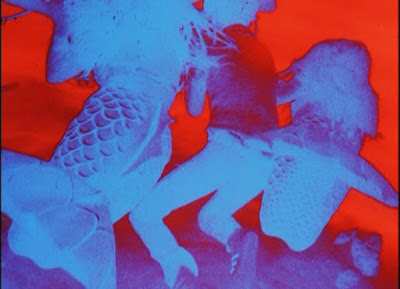
Dolphins from the introductory sequence to the film Head

In what has to be the most amazing commercial suicide note in history, what was America’s biggest pop group (eg US best selling album of 1967) managed to alienate both their huge pop audience (by going all counter-cultural and ‘strange’) and the counter-cultural set (by being the ‘manufactured’ Monkees – or the ‘prefab-Four’ as their critics dubbed them).

If psychedelia is all about challenging your senses, perceptions and preconceptions and taking your mind to an entirely different place, then what the Monkees achieved with Head is a much greater jump than Sgt Pepper – after all, people expected the Beatles to be ‘strange’ by then, particulary with John Lennon telling listeners to ‘turn off your mind relax and float downstream’ at the end of the last album.

Enlisting then-unknown Jack Nicholson to bring together and shape the script alongside the producers of the TV show, took the film to a whole new dimension – jumping from the ‘slightly surreal’ of the TV episodes to ‘seriously-out-there.’ This time the boys weren’t fighting Scooby-Doo style villains to get the girl, they were battling against the military-industrial complex, the commercial constraints of sponsorship and studio system – and the restrictive cliche that The Monkees had become on them as individuals.

Alongside this, the album itself was independently crafted as a complementary, but separate, endeavour to the film itself – taking apart songs and snippets from the film reassembling and rearranging them to form a creative product with a life and spirit of its own.

Lulling you into a psychedelic summer with the wonderfully trippy Porpoise Song, the album aims to mess with your head with Ditty Diego (War Chant) which goes from ‘Hey Hey we are the Monkees…’ (so far so familiar) to ‘…a manufactured image with no philosophies…’ (did they really just say that? It’s like a magician telling you how their trick is done, or Reynard the Fox spilling his guts all over the stage.

Continuing the mix of clips of found sound, clips from the film, with some great little tunes – and rearranging these to form a piece that stands on its own without needing the film at all.

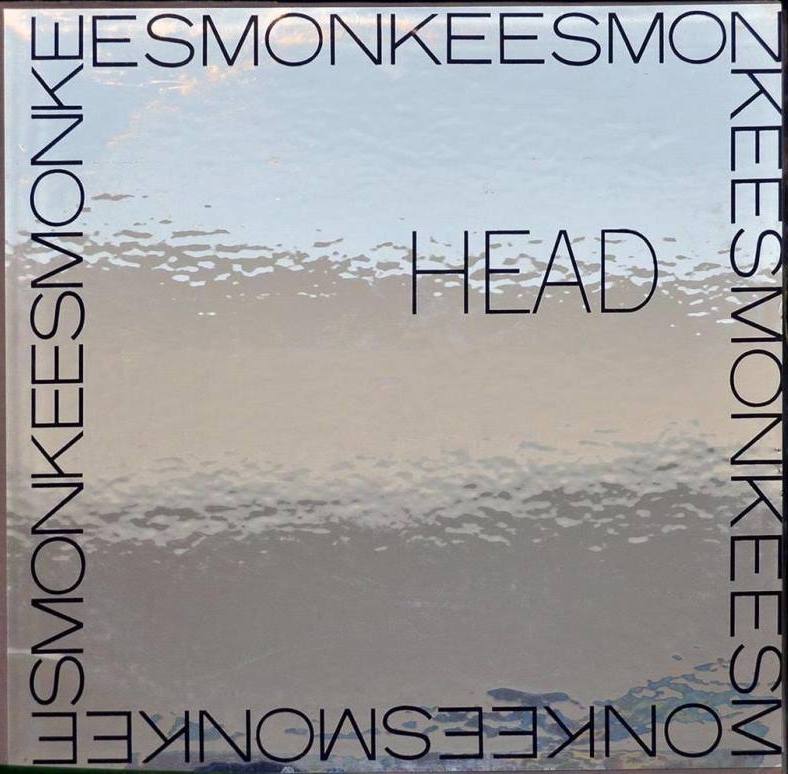
And as a piece-de-resistance, the original LP came with a shiny plastic coating whose mirror finish let you put your own face on the album cover – and caused all manner of chaos at the cover printing plants – years before Factory even contemplated sandpaper record sleeves – with the covers setting fire to the presses.

So if psychedelia is all about challenging your perceptions, preconceptions and sense of reality – taking you to a different place – then Head has all of this in spades, while sounding and feeling like the real thing. The challenge is made all the greater as it comes from a made-for-TV boy band who have dared to rip apart their fabricated world with cynicism and vision.

So leave your outdated notions at the door, check your head (as the American’s would say, and settle down to a real classic of its genre.

If you’re looking for a reason…

I spend my days collecting smithereens. I find them on buses, in department stores, and on busy pavements. At restaurant tables I pick up the leftovers of polite conversation. At railway stations, the tearful debris of parting lovers. I pocket my eavesdroppings and store them away. I make things out of them.  Roger McGough